China’s auto industry, celebrated abroad for its competitiveness, entered 2026 on shakier domestic footing.
January sales fell 3.2% year on year, dropping to 2.346 million units, signalling a marked slowdown at home despite strong export momentum. Exports surged by 44.9%, but this has only underscored the growing divide between global dominance and weakening internal demand.
A major contributor to the downturn is Beijing’s shift away from generous electric vehicle (EV) incentives. As of 1 January 2026, fully exempt new energy vehicles (NEVs) purchase tax was replaced by a 5% levy, cooling demand for battery electric and plugin hybrid models. Plugin hybrids must now meet stricter standards—such as a minimum 100 km electric only range—forcing manufacturers to upgrade models and raising vehicle costs. -vehicle-electric and plug-in hybrid models. Plug-in hybrids must now meet stricter standards—such as a minimum 100 km electric-only range—forcing manufacturers to upgrade models and raising vehicle costs.
Trade-in incentives have also been revised. Although subsidies remain, they now scale with the price of the vehicle, favouring higher end models. For example, qualifying oldercar scrappage can trigger subsidies worth up to roughly R318,000 (¥20,000), steering consumers towards more expensive purchases and squeezing mass market brands.-in incentives have also been revised. Although subsidies remain, they now scale with the price of the vehicle, favouring higher-end models. For example, qualifying older-car scrappage can trigger subsidies worth up to roughly R318,000 (¥20,000), steering consumers towards more expensive purchases and squeezing mass-market brands.
For years, manufacturers offset domestic oversupply by exporting “zero mileage” vehicles—new cars registered as used. From 1 January 2026, exporters must now provide aftersales guarantees and adhere to stricter documentation controls. This will raise inventories at home, intensifying price war pressures in a market already facing oversupply. -mileage” vehicles—new cars registered as used. From 1 January 2026, exporters must now provide after-sales guarantees and adhere to stricter documentation controls. This will raise inventories at home, intensifying price-war pressures in a market already facing oversupply.
International pressure is also mounting. The European Union (EU) imposed countervailing duties on Chinese EVs, with rates such as 17% for BYD, 18.8% for Geely, and 35.3% for SAIC—measures that significantly raise export costs. Meanwhile, the United States (US) has implemented a 100% tariff on Chinese built EVs, diminishing a once reliable outlet for surplus production. -built EVs, diminishing a once-reliable outlet for surplus production.
With export growth forecast to slow from 21% in 2025 to just 4.3% in 2026, the release valve for domestic overcapacity is tightening.
The policy shift has created rare breathing space for foreign joint ventures. SAICGM saw January sales rise 8.2% to 51,005 units, buoyed by petrol models such as the Buick Envision and Cadillac XT5. These models benefit from the new trade-in rules, which privilege higher priced petrol vehicles. -GM saw January sales rise 8.2% to 51,005 units, buoyed by petrol models such as the Buick Envision and Cadillac XT5. These models benefit from the new trade-in rules, which privilege higher-priced petrol vehicles.
In contrast, China’s EV titan BYD experienced a sharp downturn. January sales fell about 30% year on year to 210,051 units, with domestic demand particularly weak despite strong exports.
After a record 34.4 million vehicle sales in 2025, China Association of Automobile Manufacturers (CAAM) forecasts just 1% growth for 2026. NEV sales are still expected to rise, but at roughly half the pace of 2025, reflecting caution among consumers and the impact of reduced subsidies.
China may continue to reshape the global auto landscape, but at home the industry is entering a year defined by higher standards, lower incentives, and heightened competitive pressure—a stark contrast to its booming international presence
That said, South Africa like many other countries has become an import export market for Chinese auto manufacturers.
A staggering number of Chinse brands have set-up shop locally and more is to come. The range offerings of the different brands are also increasing rapidly with nearly all segments covered. Although the domestic market back in Chian would determine it, some Chinse manufacturers are considering local manufacturing in South Africa, (https://dealerfloor.co.za/industry-news/nissan-to-sell-rosslyn-plant-to-chery).
Currently the two biggest Chinse brands in South Africa is Chery and GWM. Both brands have large portfolios.
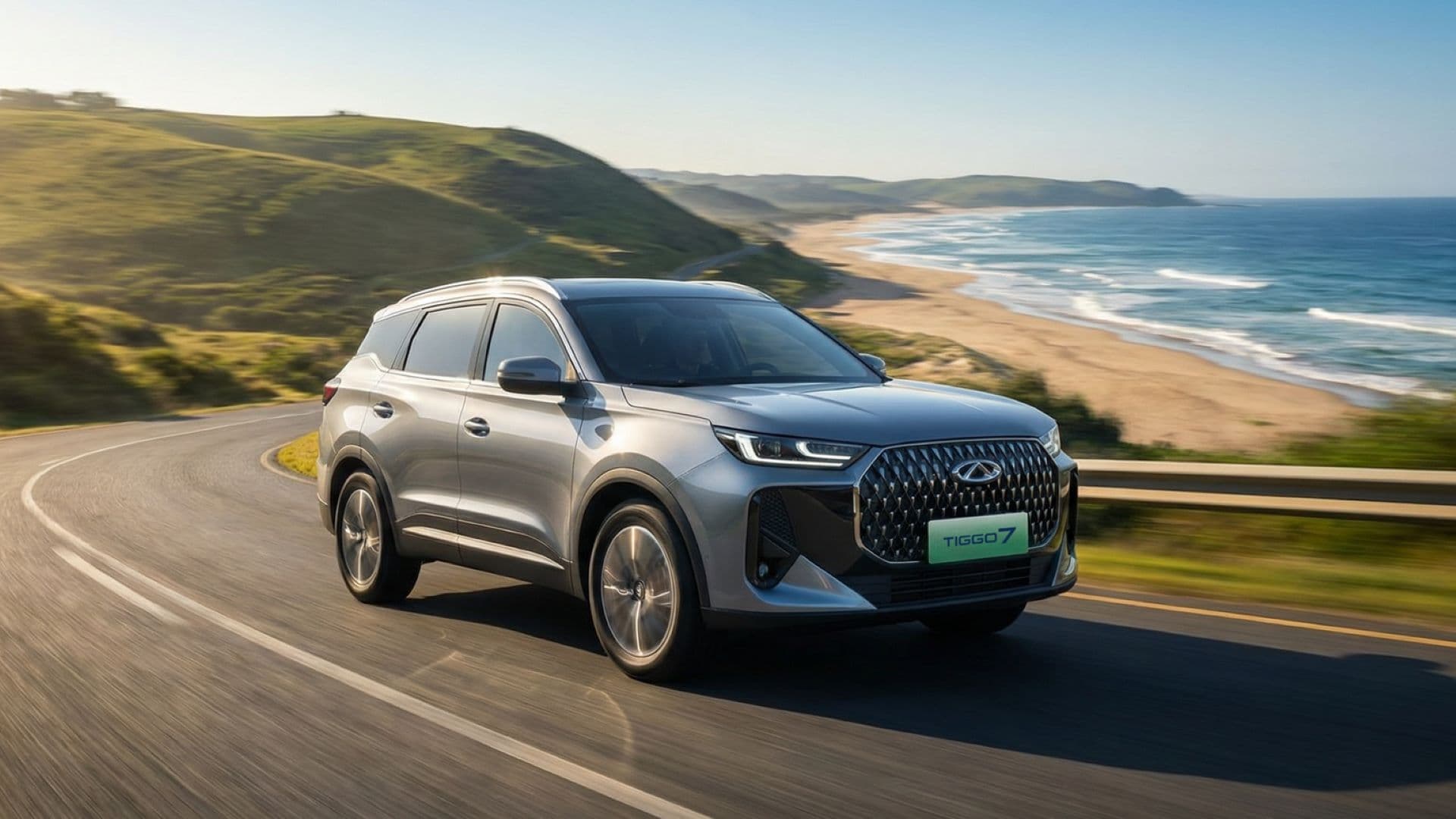
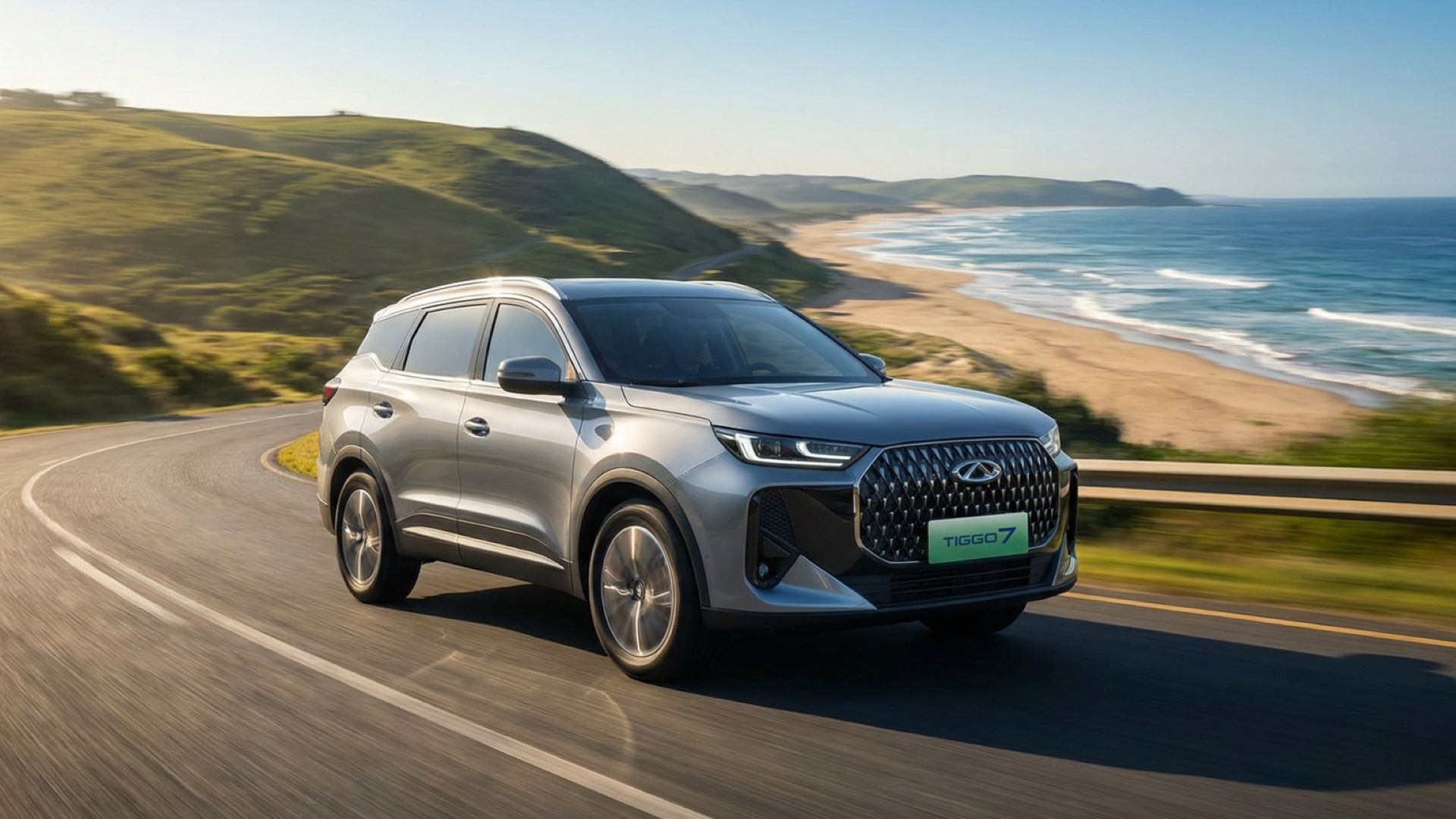
Chery is most popular for its Tiggo 4, 7, 8 and 9 ranges, while nameplates like Jaecoo & Omoda, Jetour, Lepas and iCAUR are all part of the Chery Motor Group.
GWM boasts its P-Series, Haval H series ranges, Jolion, Jolion Pro, Ora and Tank.
Brand and models:
• BAIC (Beijing and B40 Plus)
• BYD (Dolphin, Dolphin Surf, Seal, Sealion 5, 6 and 7, Shark)
• MG (ZS, Cyberster, HS and MG3)
• Foton (G7, V7 and V9)
• LDV (T60, D90 and Terron 9)
• JAC (T6 and T8)
• GAC (GS3 Emzoom and Emkoo)
• Geely (E5)
• Dongfeng (Box, 007 and 06)
• XPENG(P7)
• Jetour (Dashing, X70, T1 and T2)
• Omoda (C5, C7 and C9)
• Jaecoo (J5 and J7)
• Lepas (L4, L6 and L8)
• DFSK (Commercial)
• GMC (Vigus);
• Leapmotor (C10 REEV)
• Maxus (T90)
• Dayun (DY3)
• iCAUR (V23, oT3, V25 and V27).
More brands to come or models to be added:
Fang Cheng Bao, Denza (BYD luxury B5), Farizon (Geely), Riddara (Geely) and Zeekr (Geely).
Staff Writer
Reporting from the front lines of the automotive industry, delivering expert analysis and the technical updates that drive the South African motor sector forward.
More news from News