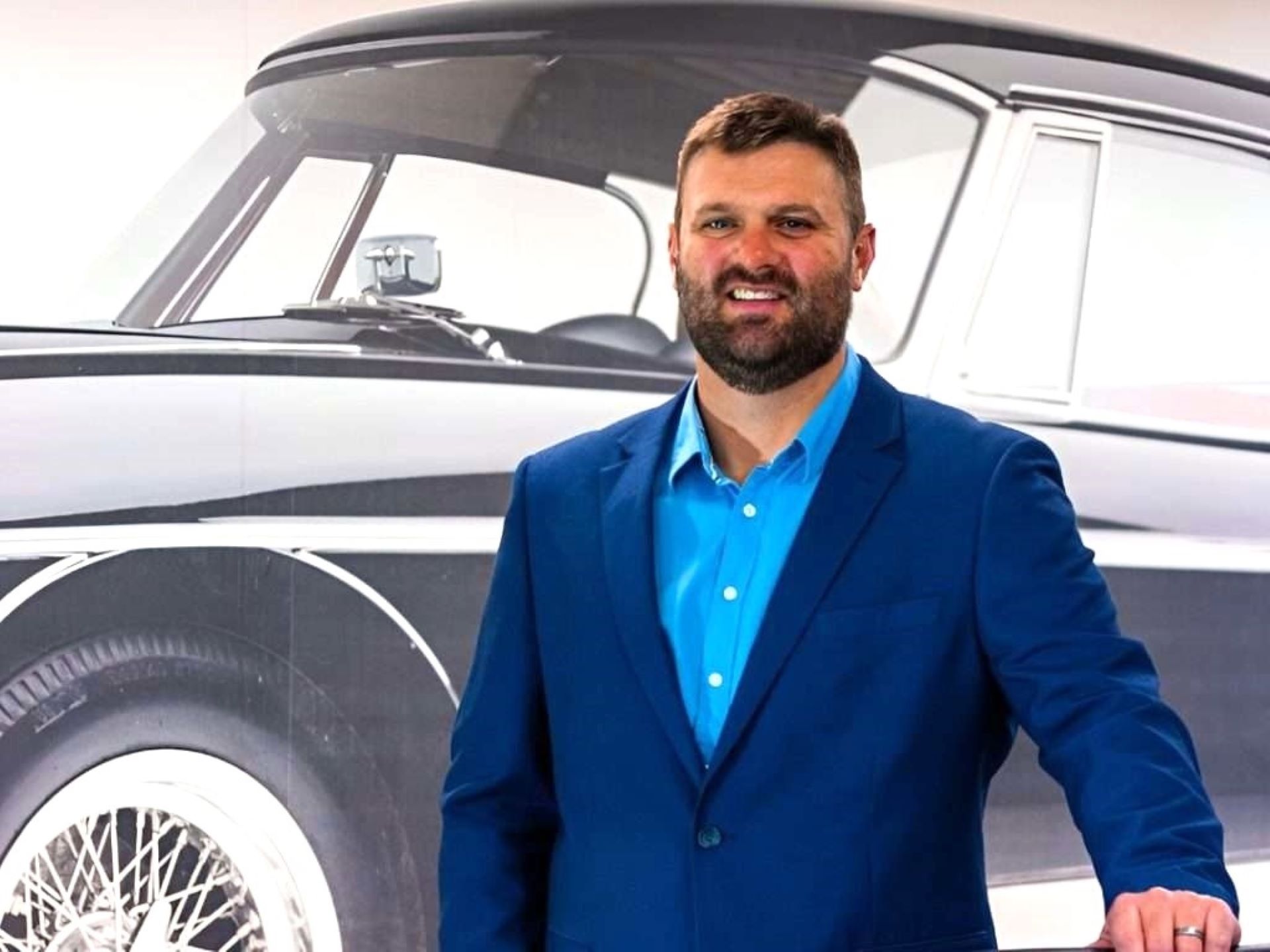
Speaking at NADA Connect 2026, the Deputy CEO of WeBuyCars offered a rare, unvarnished look into how the company rebuilt itself using data, experimentation and artificial intelligence.
“This is not the right way or the wrong way,” he began. “It is simply our story.” Yet the story carried lessons for every business wrestling with digital change.
WeBuyCars started in 2001, growing steadily until private equity arrived in 2017. What the investors found was a successful business running “off a Google Sheet and WhatsApp”. By 2018, the new Deputy CEO was tasked with digitising the operation. “We walked into a business doing 2 000 vehicles a month with basically no systems,” he recalled.
What looked like a weakness became a strategic advantage. “We had a blank canvas,” he said. “We could build what the business truly needed.”
Early on, the leadership faced a defining question: buy an off the shelf ERP or engineer their own platform. They chose to build. “We did not want the business to bend around software. The software had to bend around the business,” he said. The second reason was control. “We needed ownership of our data, its quality and how it flowed.”
One of the first hires was not a developer but a data expert. Clean data, he stressed, is the foundation upon which every future AI capability is built.
Today, their internal system is called the experimentation digital business platform. Every customer facing tweak and every internal change is tested through A/B experiments. “We take emotion out of decision making,” he explained. “Let the data tell us what works.”
This approach is made possible by distinguishing between slow, high-risk decisions and rapid, reversible ones. Buying and selling vehicles falls into the latter category, allowing hundreds of micro experiments to run continuously without operational risk.
Over several years, WeBuyCars built capabilities across multiple AI disciplines. Their models, trained on more than 370 000 trades, shifted to Bayesian statistics to capture probability distributions for every vehicle. This enables strategic buying and selling. “Every car has a price,” he said. “You just need to make sure you paid the right one.”
Image models now detect damage, segment car parts and analyse stitched undercarriage photos. “We make money when we buy the vehicle, not when we sell it,” he emphasised. “So we must know exactly what we are buying.”
The company’s Orange assistant on its website can explain model differences, calculate running costs or compare vehicles. Meanwhile, customer and social media queries are handled automatically at enormous scale. “This is not the future,” he noted. “It is live in our business today.”
The Deputy CEO described a coming shift: software agents that negotiate and transact on behalf of users. He painted a scenario in which a customer simply tells ChatGPT that they want to sell a car, and an agent representing WeBuyCars handles the conversation. “The website as we know it will disappear,” he predicted. Discoverable agents, rather than pages, will drive customer acquisition.
He closed with guiding principles that anchor their strategy:
• “Unit economics over technology. Do not build tech for the sake of tech.”
• Vertical integration to control every customer touchpoint.
• AI and humans working together. “You are not being replaced. You are becoming more effective.”
• And finally: “Look after the goose that lays the golden eggs.” Focus on what makes the core business valuable.
His message to the audience was clear and confident: AI is no longer a horizon to prepare for. “Everything I spoke about today is already deployed,” he said. “This is where business is now.”