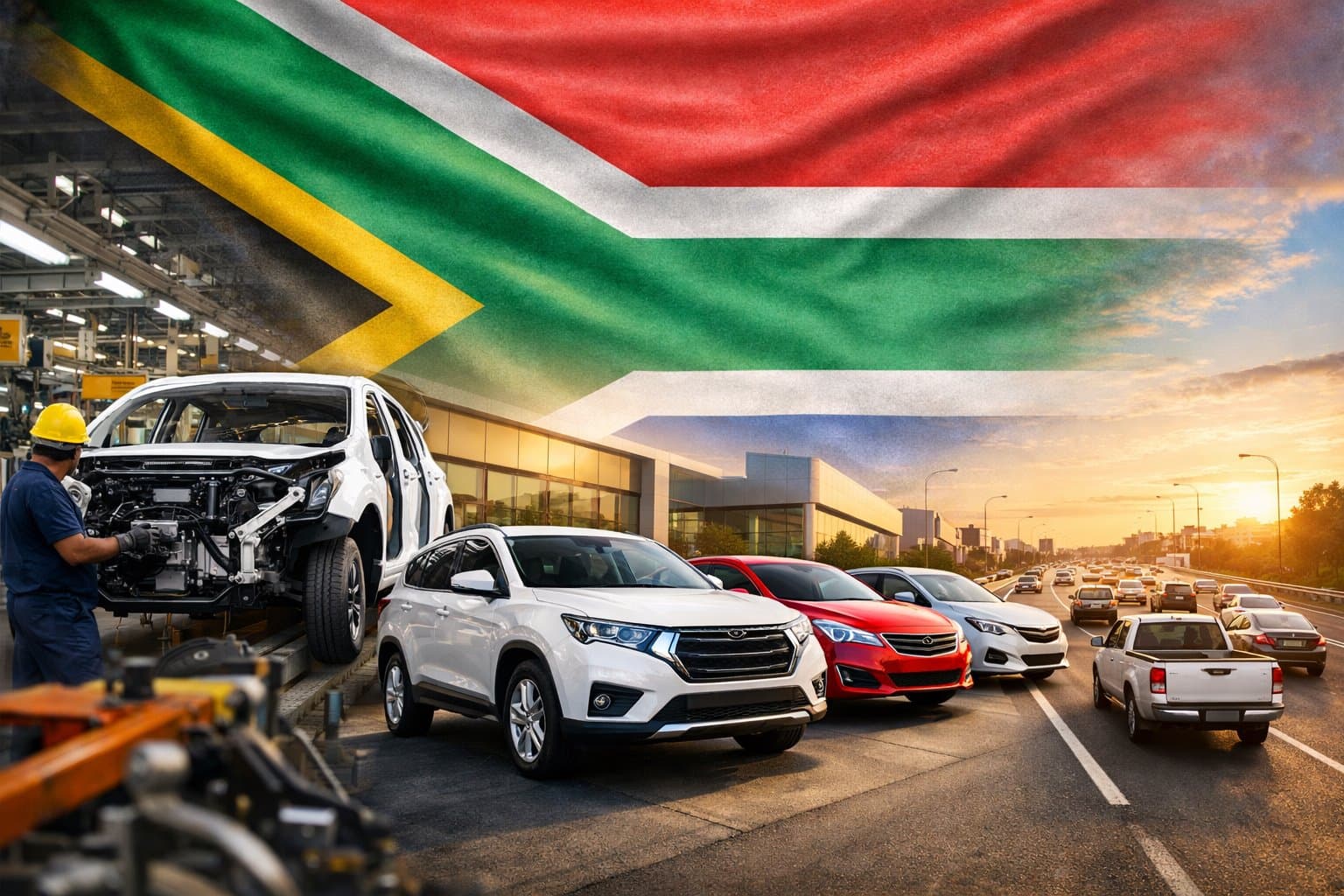
South Africa’s automotive industry remains one of the country’s most powerful economic engines, shaping regional development and export performance.
According to naamsa | The Automotive Business Council’s Trade Manual 2026, vehicle manufacturing is concentrated in Gauteng, KwaZulu-Natal, and the Eastern Cape — three provinces that have evolved into specialised clusters supporting assembly plants, suppliers, logistics, and export facilities. These hubs form the backbone of the nation’s industrial landscape, each contributing distinct strengths to a globally competitive sector.
Gauteng stands as the country’s automotive and economic powerhouse, contributing nearly 34 percent of national GDP and housing a quarter of the population. Despite being landlocked, its extensive road and rail networks link manufacturers efficiently to domestic and export markets.
The province hosts BMW, Ford, and Nissan, with Chery joining the line-up, and most first- and second-tier suppliers are centred around Johannesburg and Pretoria. Rosslyn and Silverton anchor the region’s production, supported by the Automotive Supplier Park and the Tshwane Automotive Special Economic Zone. Strong logistics connections to Durban Port and neighbouring African markets make Gauteng a magnet for investment and innovation.
KwaZulu-Natal forms the second major cluster, anchored by Toyota South Africa Motors in Durban. Its coastal location and the Durban Port — South Africa’s busiest automotive gateway — provide a strategic advantage for exports.
The KwaZulu-Natal Automotive Supplier Park and the Durban Automotive Cluster strengthen the province’s industrial ecosystem, while the N3 transport corridor ensures seamless movement of goods between Durban and Gauteng. This combination of port access and manufacturing capability positions KZN as a vital link between production and global distribution.
The Eastern Cape, meanwhile, has emerged as South Africa’s leading export-oriented automotive region. Production is centred in Gqeberha, Coega, and East London, supported by deep-water ports and advanced export infrastructure. The Coega Special Economic Zone and East London Industrial Development Zone have attracted major investment, including Stellantis’ R3 billion facility at Coega. In 2025, the province accounted for the largest share of light vehicle production and exports, underscoring its role as the country’s export hub. It is home to Isuzu, Mercedes-Benz, and Volkswagen — brands that define South Africa’s global automotive footprint.
Together, these clusters illustrate how geography and infrastructure shape industrial success. Manufacturing hubs near ports, transport corridors, and supplier networks drive production and exports, while the country’s economic centres remain the primary destinations for new vehicle sales. As AIEC and Lightstone Auto data confirm, continued investment in these regions will sustain South Africa’s position as a leading automotive producer and exporter in Africa.
Staff Writer
Reporting from the front lines of the automotive industry, delivering expert analysis and the technical updates that drive the South African motor sector forward.