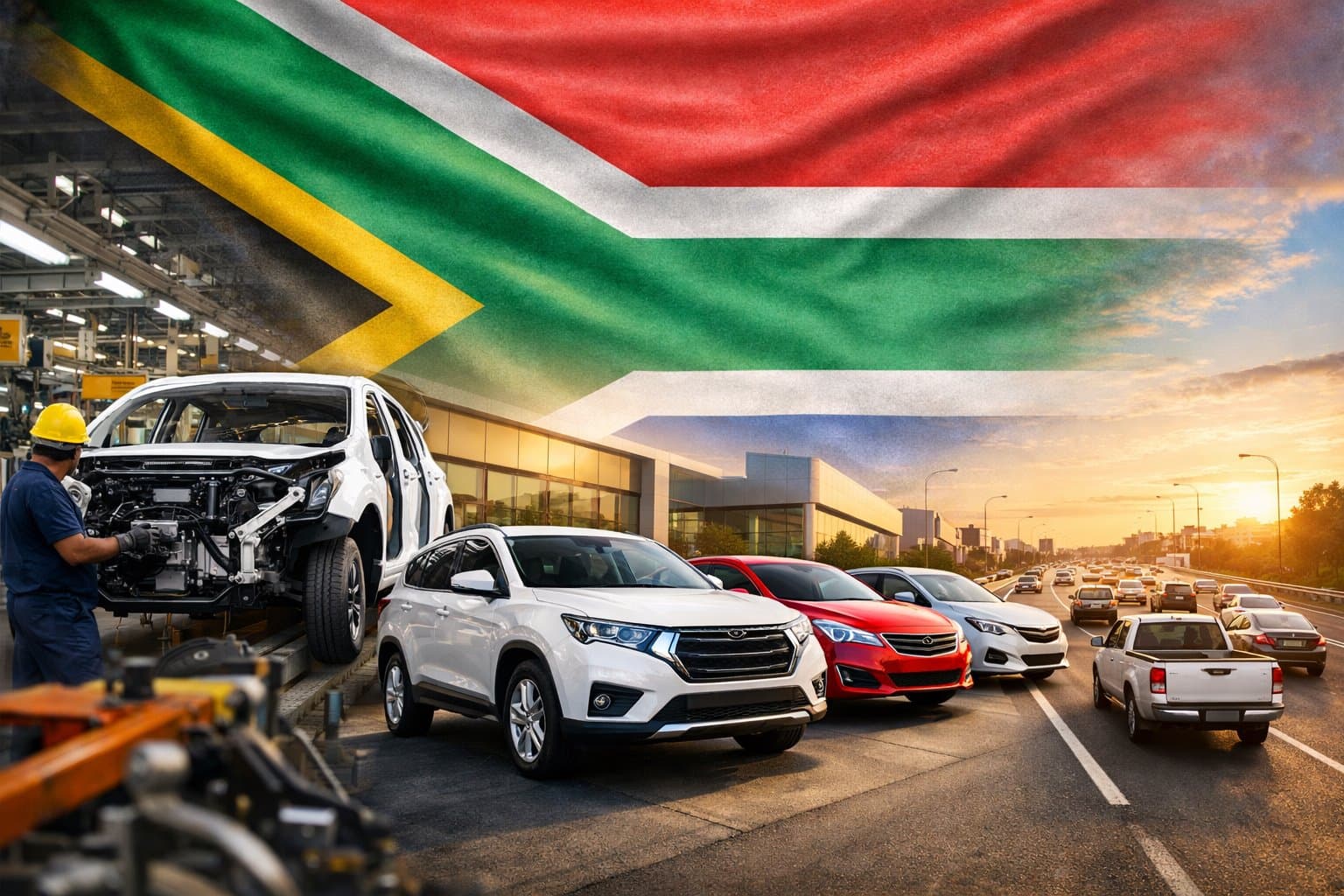
South Africa’s automotive industry ended 2025 with record-breaking achievements, underscoring its importance to the national economy while facing intensifying competition from imported vehicles.
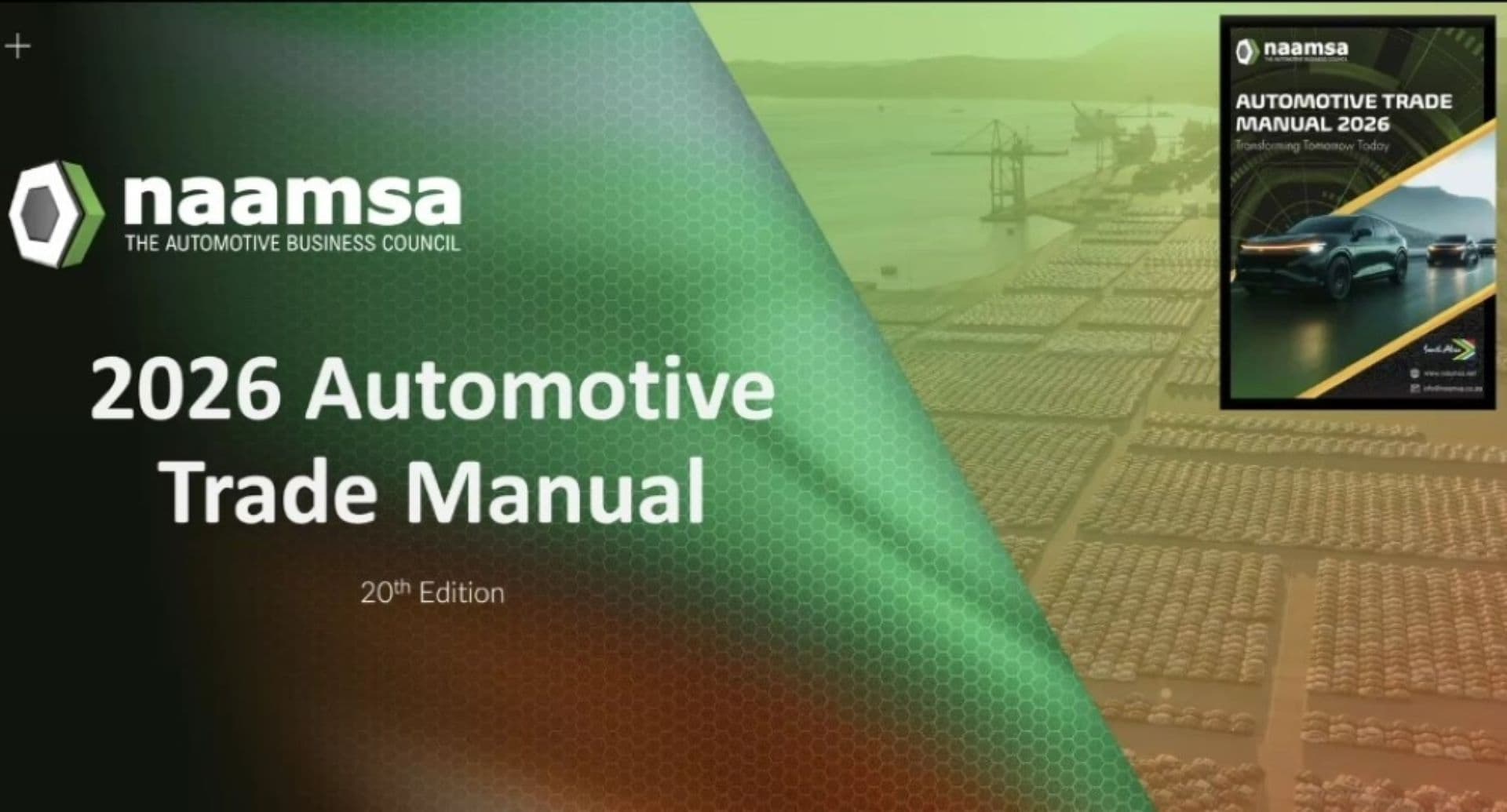
The Automotive Business Council’s 20th annual Automotive Trade Manual 2026 highlights both the sector’s resilience and the rapid transformation driven by new entrants, particularly from China.
Exports remained a cornerstone of the industry. Export earnings rose to R291 billion in 2025, up from R268,8 billion the previous year. Vehicle exports reached a record 414 271 units, valued at R229,8 billion. Automotive exports accounted for 15,6% of South Africa’s total exports, while the broader industry contributed 5,2% to GDP. Manufacturing made up 3,3% of this figure, with retail activity adding 1,9%.
Chinese Brands Gain Ground
One of the most striking developments was the surge of Chinese vehicle brands in the domestic market. In 2025, 15 Chinese brands were active in South Africa, nearly double the eight recorded in 2024. Imports from China climbed to 91 326 units, giving the country a 23,3% share of light vehicle imports, up from 17,1% the year before. Competitive pricing, modern technology and long warranties have made these brands increasingly attractive to local buyers.
India remained the largest source of imported vehicles, supplying 219 796 units or 56,2% of total imports. Many of these were entry-level cars aimed at affordability-conscious consumers. The Volkswagen Polo Vivo stood out as the only locally manufactured vehicle competing in the small-car segment, highlighting the dominance of imports in this category.
Strong Domestic Sales Recovery
Lower interest rates, record-low vehicle price inflation and broader model choice drove a rebound in domestic sales. Total new vehicle sales rose 15,7% to 597 338 units, compared to 516 103 in 2024. New energy vehicles also grew, though at a slower pace, with sales increasing 7,1% to 16 716 units. Their share of overall sales slipped slightly to 2,8%.
Global electrification trends are creating opportunities for South African component manufacturers. Areas such as fuel cells, e-axles, battery assembly and mineral beneficiation are identified as potential growth points for localisation, strengthening the industry’s competitiveness in the transition to cleaner mobility.
Export Markets Remain Vital
Europe continued to dominate as South Africa’s largest export destination, with shipments to the EU and UK valued at R182,8 billion, representing 62,8% of total automotive exports. Africa was the second-largest market, contributing R49,5 billion, mostly to Southern African Development Community states.
Germany remained the top destination for South African vehicles, followed by the UK, France, Belgium and Italy. For the sixth consecutive year, the Volkswagen Polo was the country’s most exported model. Optimism is building around the African Continental Free Trade Area, with new automotive rules of origin set to take effect in February 2026, potentially unlocking further opportunities across the continent.
Imports and Trade Balance
Light vehicle imports climbed 28,6% to 391 287 units, accounting for 69,1% of total light vehicle sales. Passenger car imports represented 82,8% of total passenger car sales. Component imports also remained high, with original equipment parts valued at R151 billion and replacement parts at R107,5 billion.
Despite rising imports, South Africa maintained a positive trade balance under APDP2, recording a surplus of R35,3 billion, though lower than the R42,8 billion achieved in 2024.
South Africa’s Place in Global Production
Globally, vehicle production rose 3,9% to 96,4 million units in 2025, with China leading at 34,5 million. South Africa produced 618 077 vehicles, up 2,9% from 2024, maintaining its position as the 21st largest producer worldwide. The country continued to dominate African production, accounting for 50,3% of the continent’s output and 46,5% of sales.
Looking ahead, Naamsa emphasises that future growth will hinge on localisation, infrastructure improvements, adaptation to new energy vehicles and sustained policy support. The industry’s ability to balance export strength with domestic competitiveness will be critical in an increasingly globalised market.
Staff Writer
Reporting from the front lines of the automotive industry, delivering expert analysis and the technical updates that drive the South African motor sector forward.