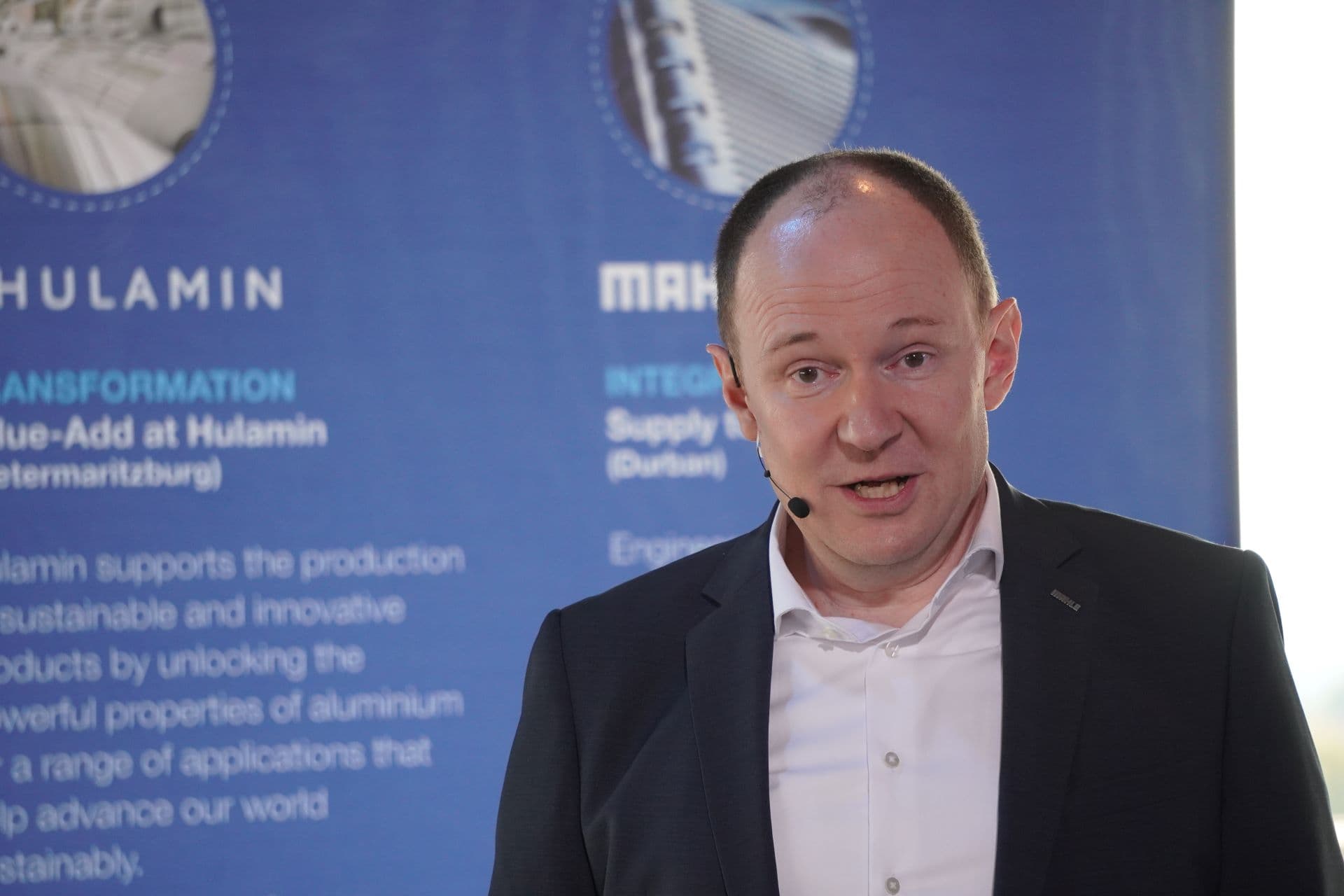
At Mahle’s International Media Tech Day on 3 June, Marco Warth, the company’s Vice President for Corporate Research and Advanced Engineering, offered a forceful defence of a broad-based approach to the future of mobility. His central argument was clear. There is no single technology that can meet every transport need in every market. Instead, the transition will depend on a mix of solutions, shaped by local conditions, energy availability, cost and application.
Warth framed mobility not as an abstract policy discussion, but as an engineering challenge grounded in practical detail. The future, he said, is being written through thermal systems, drivetrain design, filtration, energy efficiency and software architecture. For Mahle, those shifting demands are not simply pressures to be managed. They are an arena for innovation.
That message was closely tied to the company’s identity. Founded more than a century ago, Mahle remains owned by a foundation rather than outside shareholders. Warth said that structure allows the business to think long term, with profits reinvested into products, technologies and the wider mission of making mobility cleaner, smarter and more sustainable. In his telling, that long view is essential in a sector undergoing rapid and uneven change.
The strongest theme running through the talk was diversity. Warth repeatedly rejected the idea of a universal answer to decarbonised transport. Battery electric vehicles, hybrids, hydrogen, renewable fuels and highly efficient internal combustion engines all have roles to play, he argued. Their relevance will vary according to geography, infrastructure and use case. A bicycle, passenger car, truck, construction vehicle and stationary power unit all place different demands on energy systems, range and cost. Mobility, in his view, will become more varied rather than less.
This position matters in a market such as South Africa, where infrastructure constraints, energy supply and affordability remain central to the transport debate. Warth suggested that any realistic transition must account for those conditions rather than assume one pathway developed elsewhere can simply be transplanted intact. The source of the energy used to power a vehicle, he noted, is just as important as the propulsion technology itself. An electric vehicle charged from coal-fired electricity presents a different climate picture from one charged using solar or wind. The same principle applies to fuels. Renewable inputs can significantly alter the emissions profile of combustion technologies.
He also stressed that cost will remain decisive. In heavy-duty transport, operators buy technology to move goods profitably, not to make symbolic environmental statements. Warth used examples to show how the economics of trucks can swing dramatically depending on the price of hydrogen, electricity or other fuels. A solution that looks attractive under one set of assumptions may quickly lose its edge if energy prices shift. That volatility, he argued, strengthens the case for flexibility and explains the continuing relevance of hybrid systems and multiple drivetrain options.
If there was one idea Warth wanted the audience to remember, it was efficiency. He described it as the organising principle at the centre of Mahle’s strategy. Efficiency, in his definition, is about maximising output while minimising input, whether the input is cost, time, energy or raw materials. That principle applies across the board, from vehicle propulsion to cabin heating to charging times.
He made the point in practical terms. In winter driving, for instance, a battery electric vehicle must balance energy used for travel with energy used to keep occupants comfortable. Better thermal management means greater range without sacrificing comfort. Likewise, reducing charging time improves the usefulness of a vehicle in daily life. In this sense, efficiency is not just a technical target. It is directly linked to the user experience and the commercial viability of transport systems.
To bring that argument to life, Warth highlighted several technologies under development. These included compact range extenders, electric drives, advanced thermal management modules and quieter, more efficient airflow systems inspired by nature. One example drew on the shape of a penguin’s fin to improve aerodynamic flow in a blower design. Using simulation, cloud computing and generative artificial intelligence, Mahle engineers evaluated millions of design variations in a short period to identify better-performing options. The result, Warth said, was a major reduction in noise alongside improved efficiency. The broader point was that even components long considered mature can still yield gains when approached with new tools.
Artificial intelligence featured as an enabler rather than a headline in its own right. Warth’s emphasis was less on hype than on what advanced modelling can deliver in product development. The ability to test vast numbers of design possibilities at speed opens up improvements that traditional engineering approaches might never have found. For a company working across conventional engines, electrification and thermal systems, that kind of capability could become increasingly important.
Warth also positioned hydrogen as a strategic opportunity, particularly in regions with strong renewable energy potential. He pointed to developments in Namibia as an example of how future energy systems could be built around solar and wind resources, creating the possibility not only of decarbonised transport but also of export industries and wider economic development. For Mahle, hydrogen is not limited to fuel cells. It also includes hydrogen-powered combustion engines and broader industrial applications.
By the end of the address, the message was consistent and tightly drawn. Mahle is not betting on one winner. It is trying to supply the systems, expertise and engineering depth needed for a transport sector that will remain technologically mixed for years to come. Warth’s case was that future mobility must be cleaner, affordable and practical, but also adaptable to the real conditions of different markets.
For South Africa, that is a message likely to resonate. The transition to lower-emission transport will not be determined by slogans. It will be shaped by infrastructure, economics, energy supply and engineering choices. Warth’s presentation suggested Mahle believes the winners in that environment will be those prepared for complexity rather than simplicity.
Staff Writer
Reporting from the front lines of the automotive industry, delivering expert analysis and the technical updates that drive the South African motor sector forward.