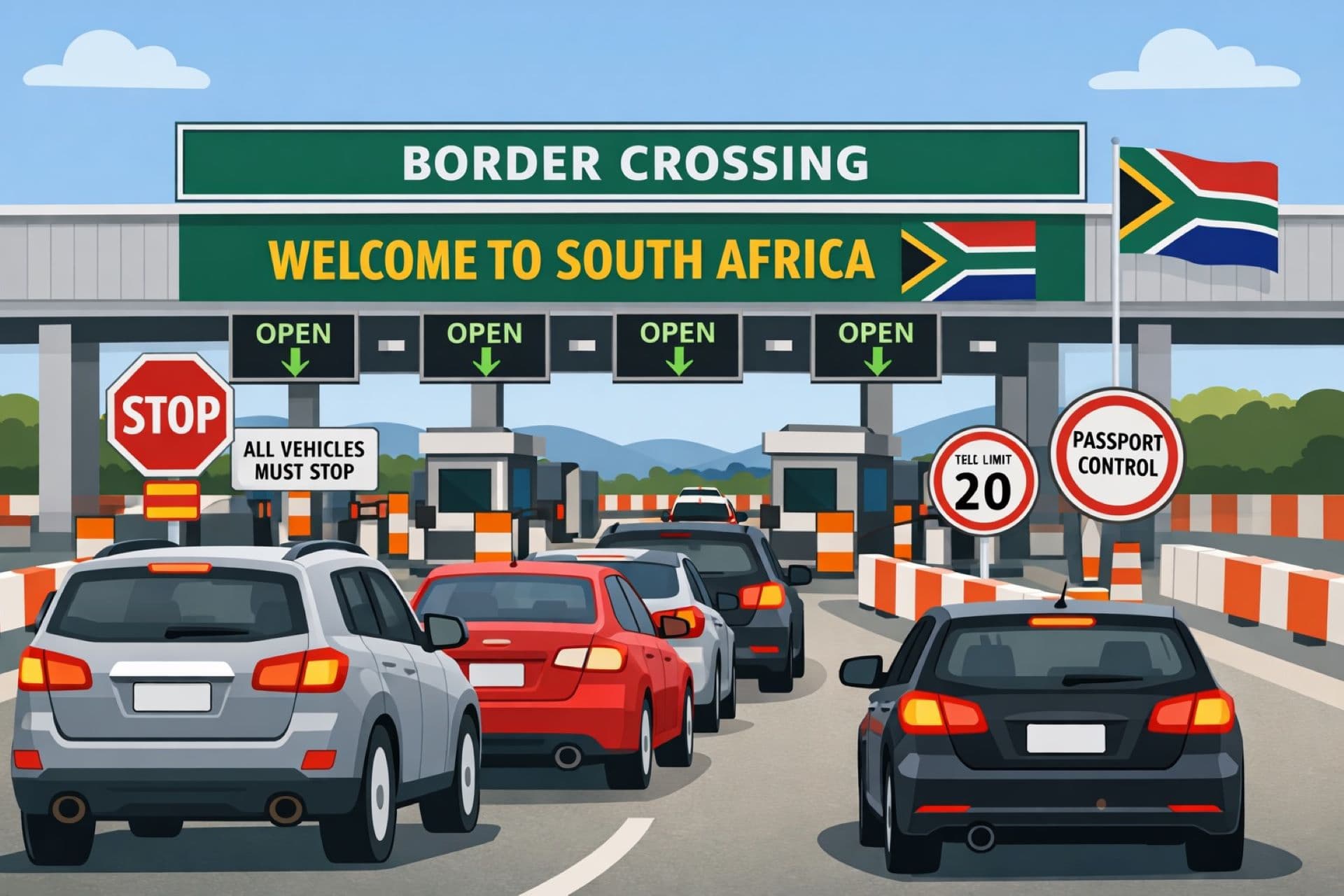
South Africa has entered a new phase of border management with the introduction of the South African Revenue Service’s (SARS) digital Traveller Declaration System, which officially came into effect on 1 June 2026.
The initiative marks a significant step in modernising customs oversight, ensuring compliance, and strengthening the integrity of cross-border vehicle movements.
Under the new system, all travellers entering the country with foreign registered vehicles must declare them and obtain a Temporary Import Permit (TIP). By the end of May, more than 38 900 permits had already been issued, reflecting strong early compliance ahead of the official launch. SARS Commissioner Dr Johnstone Makhubu described the development as part of a broader effort to improve efficiency and facilitate legitimate trade and travel. “The obligation to declare goods and vehicles at our borders is firmly rooted in South African law. As SARS, in collaboration with other state law enforcement agencies, we have a duty to enforce that law consistently and fairly while making it easy for honest travellers to comply,” he explained.
The Temporary Import Permit
The TIP is central to the new regime. It allows a foreign registered vehicle to be used legally in South Africa for up to six months and remains valid for multiple border crossings during that period. This means commuters, traders, students, and tourists do not need to reapply each time they enter the country. Importantly, SARS has confirmed that the permit is free of charge.
The rules apply equally to vehicles from member states of the Southern African Customs Union (SACU), which includes Botswana, Namibia, Lesotho, and Eswatini. Although SACU facilitates trade between member countries, SARS has stressed that foreign registered vehicles remain subject to customs controls. Dr Makhubu noted: “SACU arrangements facilitate trade, but they do not remove customs control. A vehicle registered outside South Africa remains a foreign vehicle under our law and must be declared as such.”
Streamlined Process for Travellers
Travellers can submit their declarations online via the SARS Traveller Management System, the SARS website, or mobile applications before arriving at the border. Once completed, they receive a reference number to present to customs officials. For those unable to complete the process in advance, digital kiosks and SARS staff are available at border posts to assist.
Closing Loopholes and Protecting Industry
The system also addresses long-standing concerns within the automotive industry. Historically, some foreign registered vehicles entered South Africa and were sold locally without undergoing proper importation. These transactions often bypassed customs duties, VAT, and registration requirements, creating unfair competition for local dealers and reducing state revenue. Under the new rules, vehicles imported under a TIP cannot legally be sold in South Africa. Anyone wishing to sell such a vehicle must complete the full importation process, pay all applicable duties, and comply with registration requirements.
Benefits and Challenges
For local dealers and importers, the benefits are clear: a more level playing field and improved oversight of cross-border vehicle movements. Government stands to gain through enhanced revenue collection and stronger national security, with risk-based screening reducing opportunities for smuggling and illicit trade.
There may be initial challenges, particularly for frequent cross-border travellers unfamiliar with the system, and transport operators will need to ensure administrative compliance. Nevertheless, SARS maintains that the digital approach will ultimately reduce paperwork and speed up border processing for those who follow the rules.
With nearly 39 000 vehicles already registered, the message from SARS is unequivocal: foreign registered vehicles are welcome in South Africa, but they must operate within the customs framework. The new declaration regime promises greater transparency, improved compliance, and a fairer environment for legitimate businesses.
Image: AI Generated
Staff Writer
Reporting from the front lines of the automotive industry, delivering expert analysis and the technical updates that drive the South African motor sector forward.